
Introduction
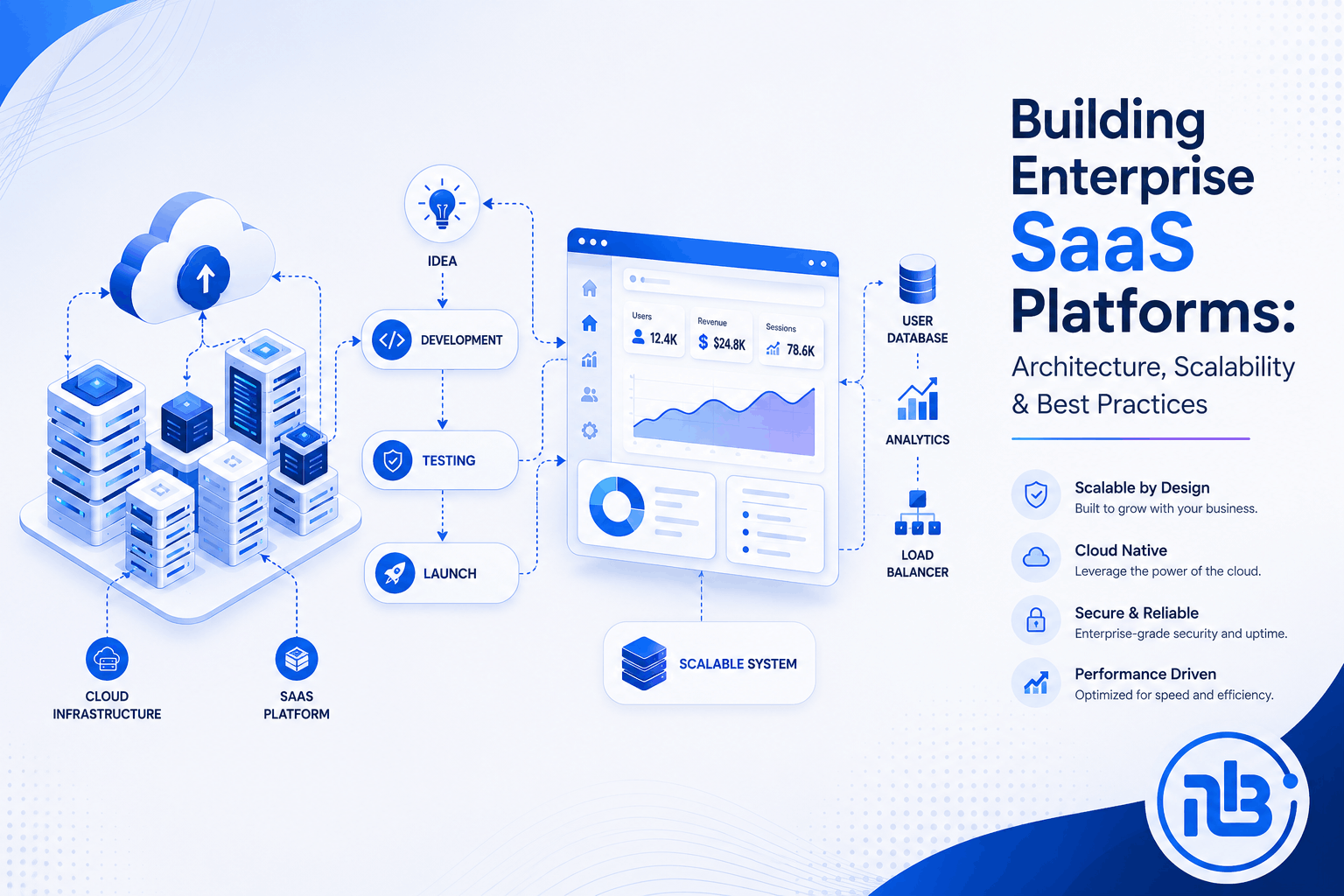
Software as a Service (SaaS) has transformed how businesses develop and use software. Instead of investing heavily in on-premise infrastructure, organizations now prefer cloud-based platforms that are scalable, secure, and accessible from anywhere.
From CRM and ERP systems to logistics platforms and travel marketplaces, Enterprise SaaS solutions help businesses automate operations, reduce costs, and adapt quickly to changing market demands.
However, building a successful SaaS platform requires more than developing a web application. It demands careful planning around architecture, scalability, security, integrations, and future growth.
In this guide, we’ll explore the essential building blocks of Enterprise SaaS and the best practices for designing applications that can grow with your business.
What is Enterprise SaaS?
Enterprise SaaS is a cloud-based software solution designed for organizations that require secure, scalable, and feature-rich applications capable of supporting multiple users, departments, or even multiple businesses from a single platform.
Unlike traditional software that must be installed and maintained on individual servers, SaaS applications are centrally hosted and accessed through a web browser or mobile application.
Popular examples include Salesforce, Microsoft Dynamics 365, HubSpot, and ServiceNow.
Key Benefits
- Cloud-hosted infrastructure
- Subscription-based pricing
- Automatic software updates
- Secure access from anywhere
- Easy third-party integrations
- High availability and scalability
These capabilities allow businesses to focus on growth instead of infrastructure management.
Why Businesses are Moving to SaaS
Organizations across industries are increasingly adopting SaaS because it offers greater flexibility, lower operational costs, and faster deployment compared to traditional software.
Some of the key reasons include:
Lower Investment
Subscription-based pricing eliminates the need for expensive hardware and perpetual software licenses.
Faster Deployment
Cloud platforms can be launched in weeks instead of months.
Scalability
Resources can easily expand as the business grows, supporting more users and higher workloads without major infrastructure changes.
Anywhere Access
Employees can securely access applications from offices, homes, or while traveling.
Continuous Improvements
Automatic updates ensure businesses always have access to the latest features, security patches, and performance improvements.
Better Integration
Modern SaaS platforms easily connect with payment gateways, CRMs, ERPs, marketing tools, and other third-party services using APIs.
Characteristics of Enterprise SaaS
Not every web application qualifies as Enterprise SaaS. Enterprise platforms are built with long-term scalability, flexibility, and reliability in mind.
Some defining characteristics include:
Cloud-Native Design
Designed specifically for cloud environments, enabling high availability and elastic scaling.
Modular Architecture
Features such as user management, billing, reporting, and notifications are developed as independent modules, making future enhancements easier.
Multi-Organization Support
A single platform can securely serve multiple organizations while keeping each customer’s data isolated.
Enterprise Security
Security is integrated from the beginning through role-based access control, encrypted communication, audit logs, and secure authentication mechanisms.
API-Driven Connectivity
Enterprise applications are expected to integrate seamlessly with external systems through secure APIs.
High Availability
Redundant infrastructure, automated backups, and monitoring help ensure minimal downtime.
Core SaaS Architecture
A well-designed SaaS platform follows a layered architecture where each component has a specific responsibility.
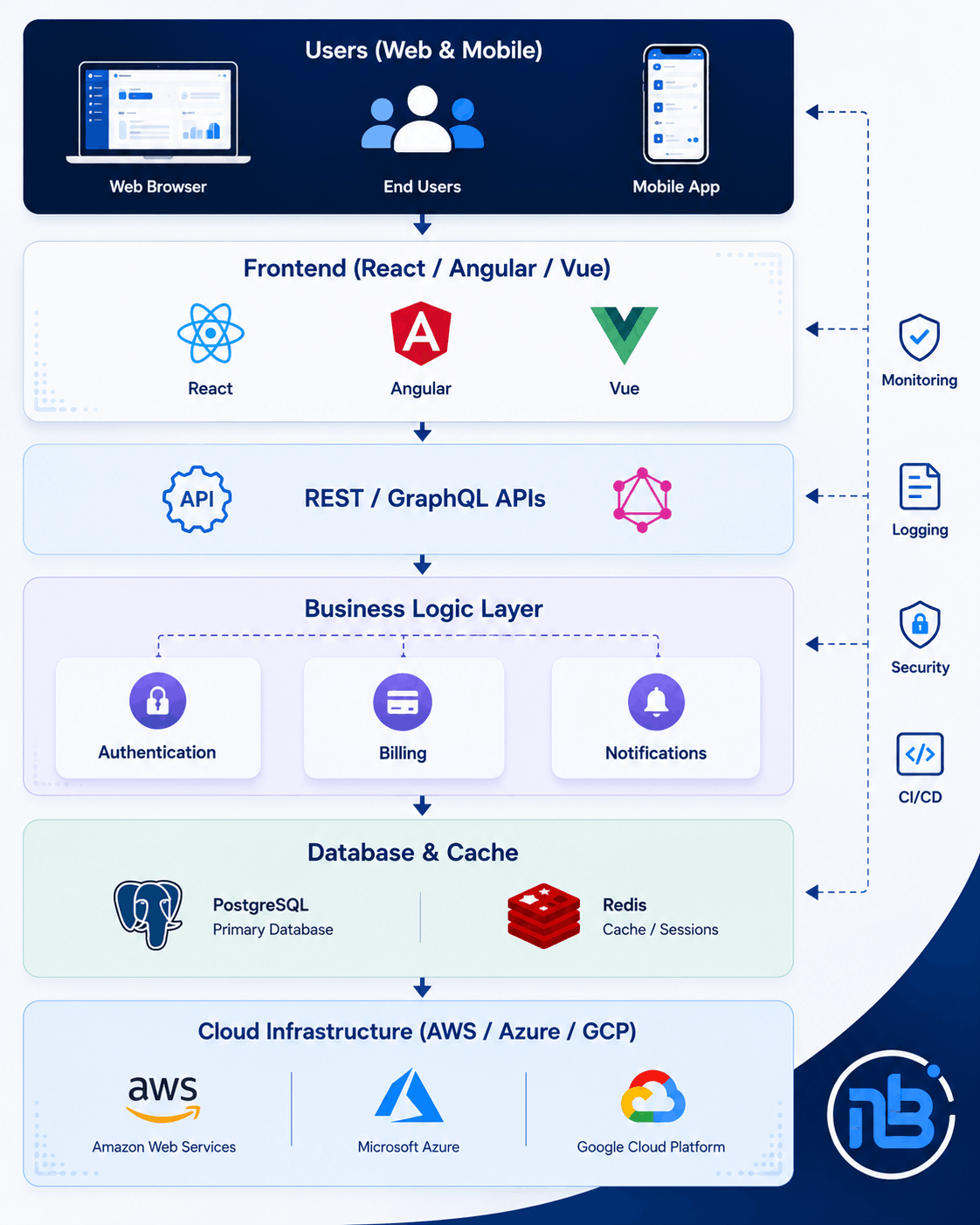
This architecture provides several advantages:
- Independent scalability of each layer
- Easier maintenance and feature expansion
- Improved security through separation of concerns
- Better performance with caching and cloud infrastructure
- Simplified integration with external services
Choosing the right architecture at the beginning significantly reduces future technical debt and prepares the platform for long-term business growth.
Monolithic vs. Microservices Architecture
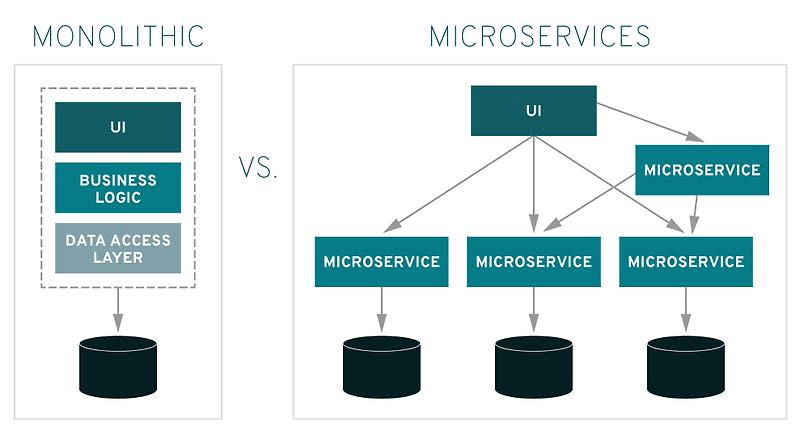
Every SaaS platform begins with an architectural decision that impacts its future scalability. A Monolithic Architecture keeps all modules authentication, billing, reporting, notifications, and business logic in a single application. It’s easier to develop and deploy initially, making it suitable for MVPs and startups.
As user demand grows, many organizations transition to Microservices Architecture, where each service operates independently. This enables individual components to scale, deploy, and evolve without affecting the rest of the platform. While microservices introduce additional operational complexity, they provide greater flexibility and resilience for enterprise applications.
Multi-Tenant vs. Single-Tenant SaaS
A Single Tenant model provides every customer with an isolated application and database, offering maximum customization and control. In contrast, Multi Tenant SaaS allows multiple customers to share the same application while securely isolating their data.
For most SaaS businesses, multi-tenancy offers lower infrastructure costs, simplified maintenance, and faster feature rollouts, making it the preferred choice for scalable cloud platforms.
| Feature | Single-Tenant | Multi-Tenant |
|---|---|---|
| Infrastructure Cost | Higher | Lower |
| Scalability | Moderate | Excellent |
| Maintenance | Individual | Centralized |
| Customization | High | Configurable |
| Best For | Large Enterprises | SaaS Products |
Choosing the Right Technology Stack
Selecting the right technology stack should align with your business goals rather than current trends. A modern SaaS platform typically includes:
- Frontend: React.js / Next.js
- Backend: Node.js or Laravel
- Database: PostgreSQL or MySQL
- Cache: Redis
- Search: Elasticsearch
- Cloud: AWS, Azure, or Google Cloud
- Containerization: Docker & Kubernetes
Prioritize technologies with strong community support, scalability, and long-term maintainability.
Database Design Best Practices
An efficient database is essential for application performance. Best practices include:
- Normalize core business data while selectively denormalizing for reporting.
- Add indexes to frequently queried fields.
- Use UUIDs where distributed systems are expected.
- Separate transactional and analytical workloads.
- Implement automated backups, replication, and disaster recovery strategies.
Well-designed databases reduce query times and improve system reliability as data grows.
Authentication & Security
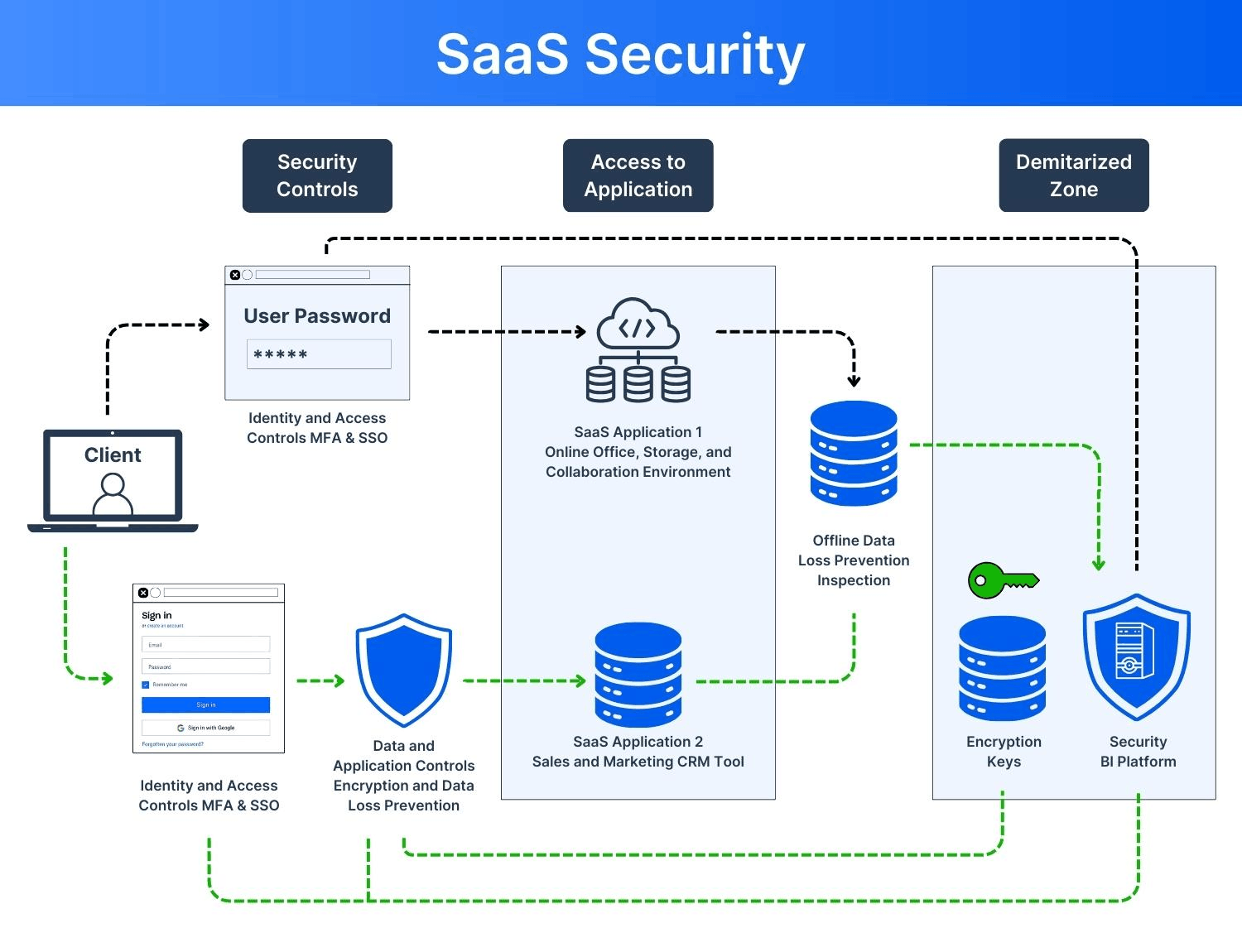
Security should be integrated from the beginning rather than added later. Enterprise SaaS platforms should implement:
- OAuth 2.0 or JWT-based authentication
- Role-Based Access Control (RBAC)
- Multi-Factor Authentication (MFA)
- End-to-end encryption (HTTPS/TLS)
- Secure password hashing
- Audit logs and activity tracking
- Regular vulnerability assessments
A proactive security strategy protects both customer data and business reputation.
API-First Development
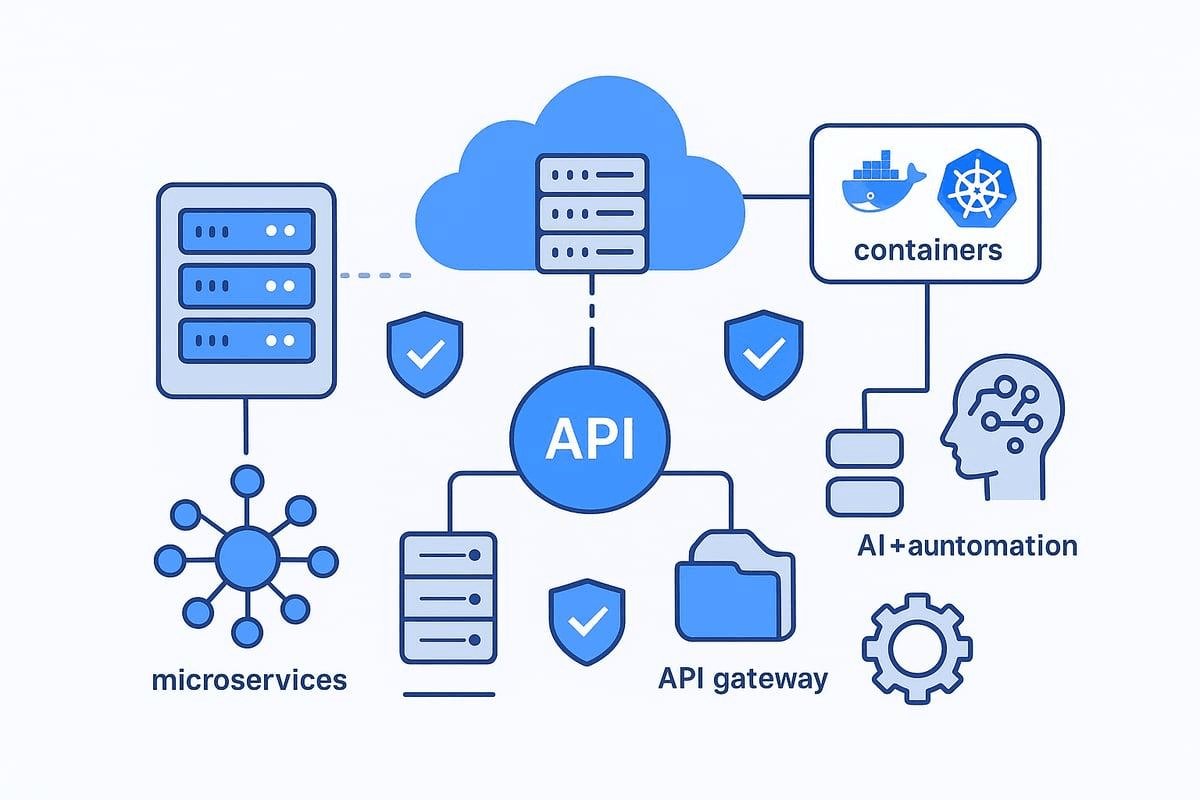
Modern SaaS applications rarely operate in isolation. They integrate with payment gateways, CRMs, ERPs, mobile apps, marketing platforms, and third-party services. An API-First approach designs APIs before application development, ensuring consistent communication across all systems.
Benefits include:
- Faster frontend and mobile development
- Easier third-party integrations
- Future-ready architecture
- Better developer collaboration
Well-documented REST or GraphQL APIs also simplify future product expansion and partner integrations.
Performance & Scalability
As user traffic grows, applications must continue delivering a fast and reliable experience. Enterprise SaaS platforms achieve this through efficient caching, load balancing, optimized database queries, Content Delivery Networks (CDNs), and auto-scaling cloud infrastructure.
Key performance strategies include:
- Redis for caching
- CDN for static assets
- Load balancers for traffic distribution
- Database query optimization
- Horizontal cloud scaling
A scalable architecture minimizes downtime while ensuring consistent performance during peak usage.
DevOps & CI/CD
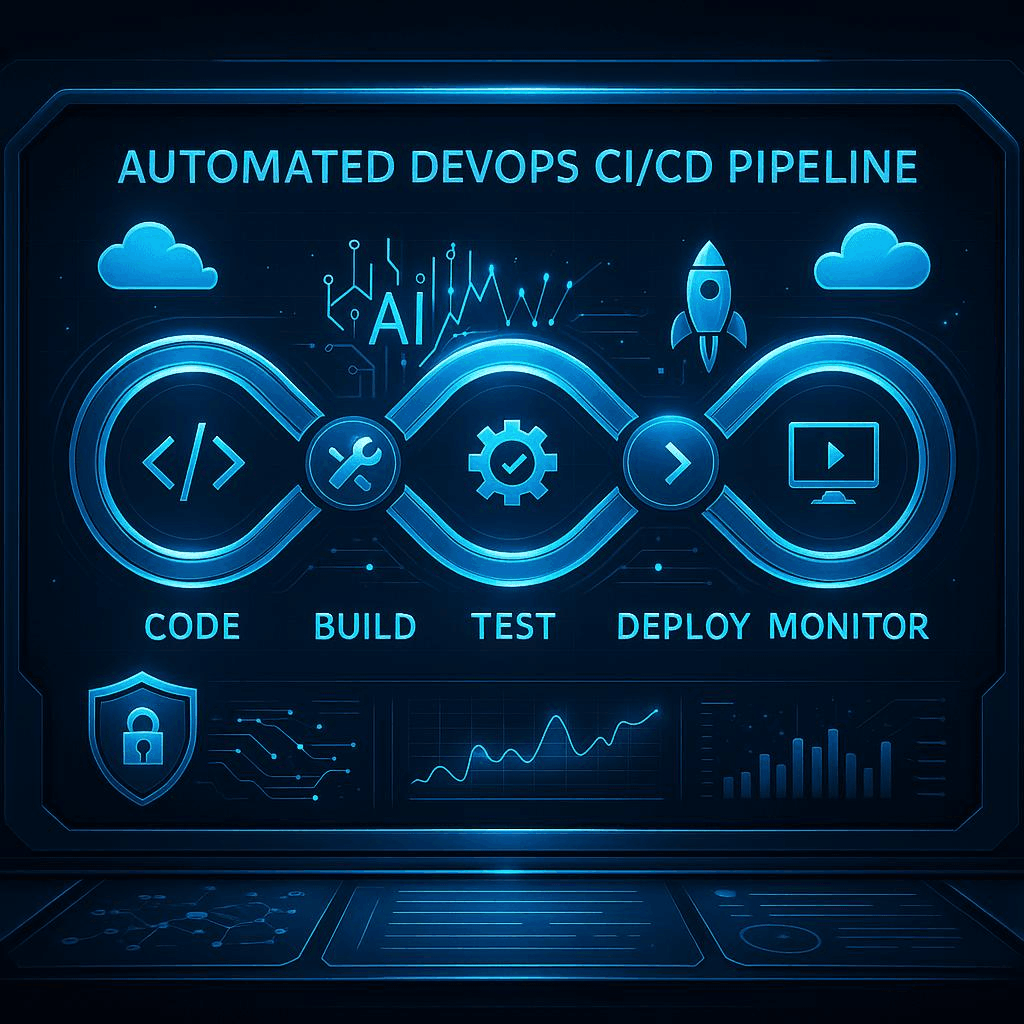
Continuous Integration and Continuous Deployment (CI/CD) automate software delivery, allowing teams to release updates quickly with minimal risk.
A typical DevOps workflow includes:
Code → Build → Automated Testing → Staging → Production Deployment → Monitoring
Automation reduces deployment errors, improves software quality, and enables faster feature releases without disrupting users.
Monitoring & Observability
Deploying an application is only the beginning. Continuous monitoring helps identify performance issues before they affect customers.
A comprehensive monitoring strategy tracks:
- Application uptime
- API response times
- Database performance
- Server health
- Error logs
- User activity
Real-time dashboards and automated alerts enable development teams to resolve issues proactively and maintain service reliability.
Common Mistakes
Many SaaS products face scalability challenges due to decisions made during the early stages of development. Common pitfalls include:
- Building without scalability planning
- Ignoring security best practices
- Poor database design
- Lack of automated testing
- Overcomplicated architecture for an MVP
- Missing monitoring and backup strategies
The most successful SaaS platforms balance simplicity, scalability, and maintainability, allowing the application to evolve as business requirements grow.
Future Trends
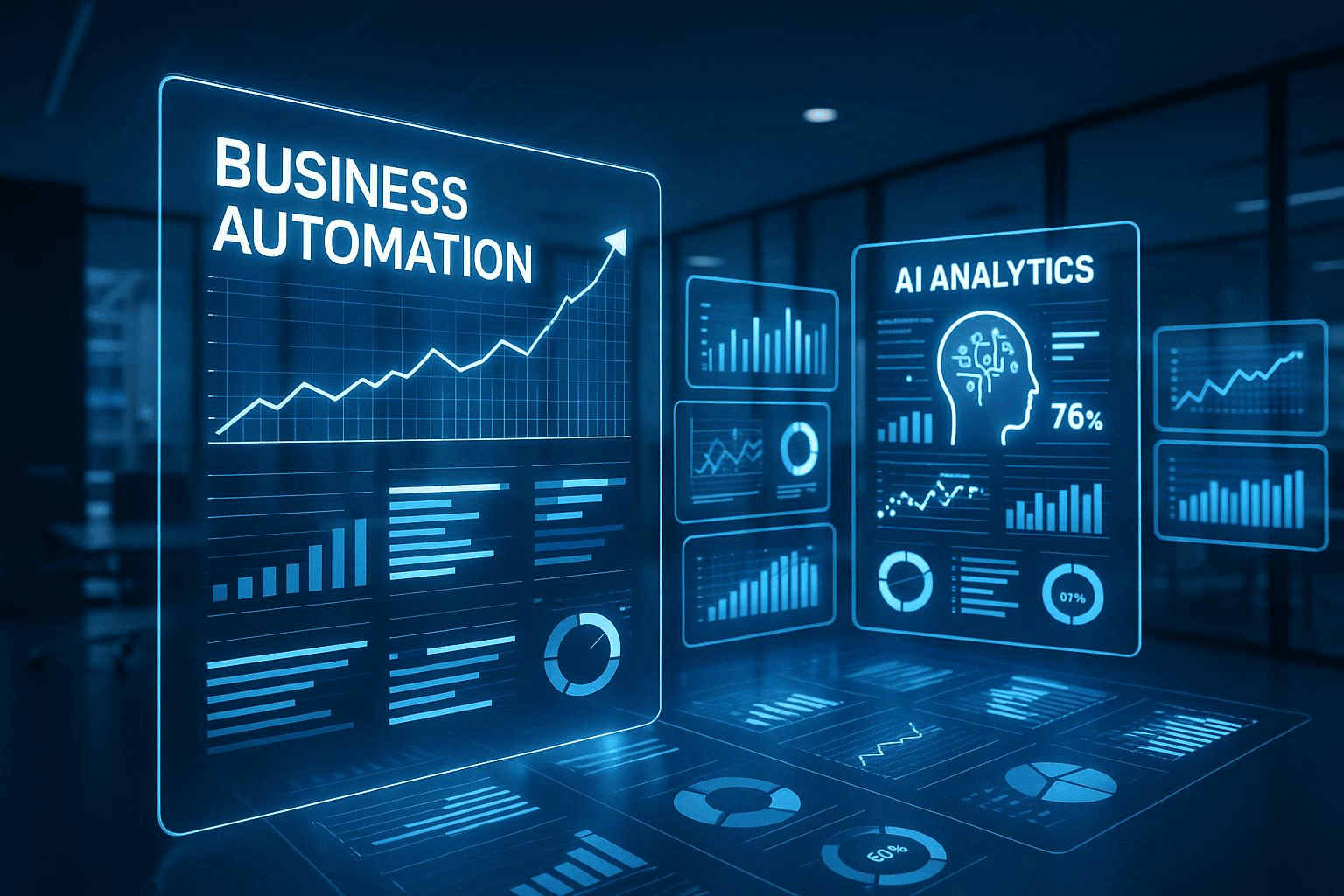
Enterprise SaaS is evolving rapidly with technologies that improve automation, scalability, and user experience. Businesses are increasingly adopting Artificial Intelligence (AI) for predictive analytics, low-code/no-code capabilities for faster customization, serverless computing for cost optimization, and event-driven architectures for real-time data processing.
Other emerging trends include AI-powered chatbots, advanced workflow automation, industry-specific SaaS platforms, enhanced cybersecurity frameworks, and deeper integrations through APIs. Organizations that embrace these innovations will be better positioned to adapt to changing market demands and deliver greater value to their customers.
How We Approach This at Notebrains
At Notebrains, we believe successful SaaS platforms are built around business objectives first, technology second. Every project begins with understanding the client’s workflows, user journeys, scalability requirements, and long-term product vision.
Our team has experience designing and developing enterprise-grade CRM systems, logistics platforms, travel marketplaces, courier management solutions, and custom business applications using React.js, Node.js, Laravel, PostgreSQL, MySQL, Redis, Flutter, and AWS.
Rather than building software that only solves today’s challenges, we focus on creating secure, modular, and future-ready platforms that can evolve as businesses grow.
Frequently Asked Questions
Enterprise SaaS is a cloud-hosted software platform designed to serve businesses with scalable, secure, and subscription-based applications.
Start with a well-structured modular monolith for MVPs, and transition to microservices when business complexity and scale justify it.
PostgreSQL is widely preferred for enterprise applications due to its reliability, performance, and scalability, while Redis enhances performance through caching.
AWS, Microsoft Azure, and Google Cloud are all excellent choices, depending on your business requirements, budget, and ecosystem preferences.
Conclusion
Building an Enterprise SaaS platform is not just about selecting the latest technologies, it’s about creating an architecture that is scalable, secure, maintainable, and aligned with long-term business goals. By making informed decisions around architecture, databases, APIs, security, cloud infrastructure, and DevOps from the beginning, organizations can reduce technical debt and accelerate future growth.
Whether you’re building a new SaaS product or modernizing an existing platform, investing in the right foundation today will help ensure your application remains reliable, adaptable, and competitive for years to come.