
Introduction
Data has become one of the most valuable assets for modern businesses. Yet, collecting data alone is no longer enough. The real competitive advantage comes from understanding what that data means and, more importantly, what it can predict.
This is where Predictive Analytics comes in.
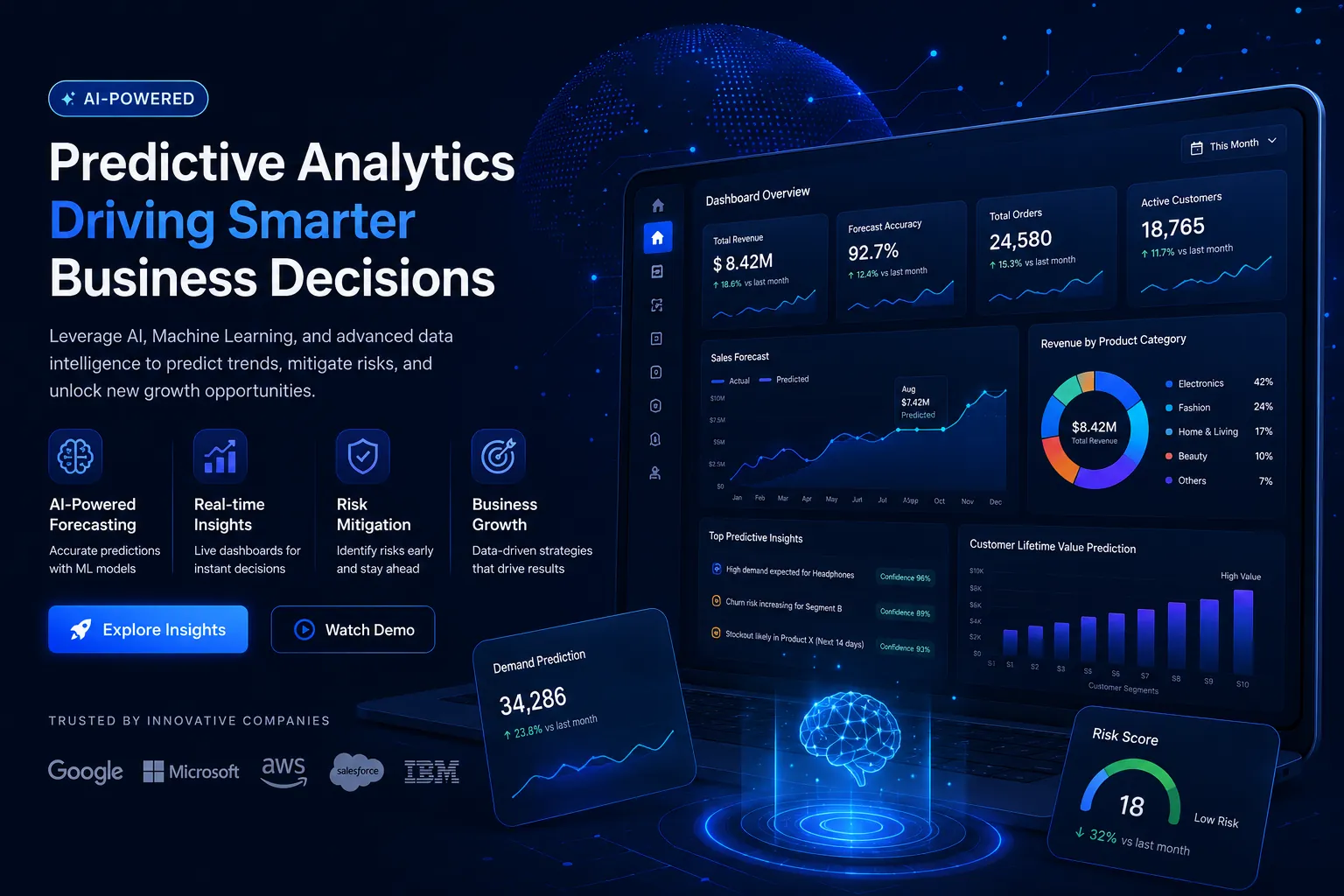
Powered by Artificial Intelligence (AI), Machine Learning (ML), and Business Intelligence (BI), predictive analytics helps organizations anticipate future outcomes instead of simply reacting to historical events.
Whether it’s forecasting sales, predicting customer behavior, identifying fraudulent transactions, optimizing inventory, or improving operational efficiency, businesses across industries are increasingly relying on predictive analytics to make smarter decisions.
In this guide, we’ll explore how predictive analytics is transforming modern enterprises, the technologies behind it, practical business use cases, and the best practices for implementing AI-driven forecasting solutions.
What is Predictive Analytics?
It is the process of using historical data, statistical models, Artificial Intelligence, and Machine Learning algorithms to predict future events and business outcomes.
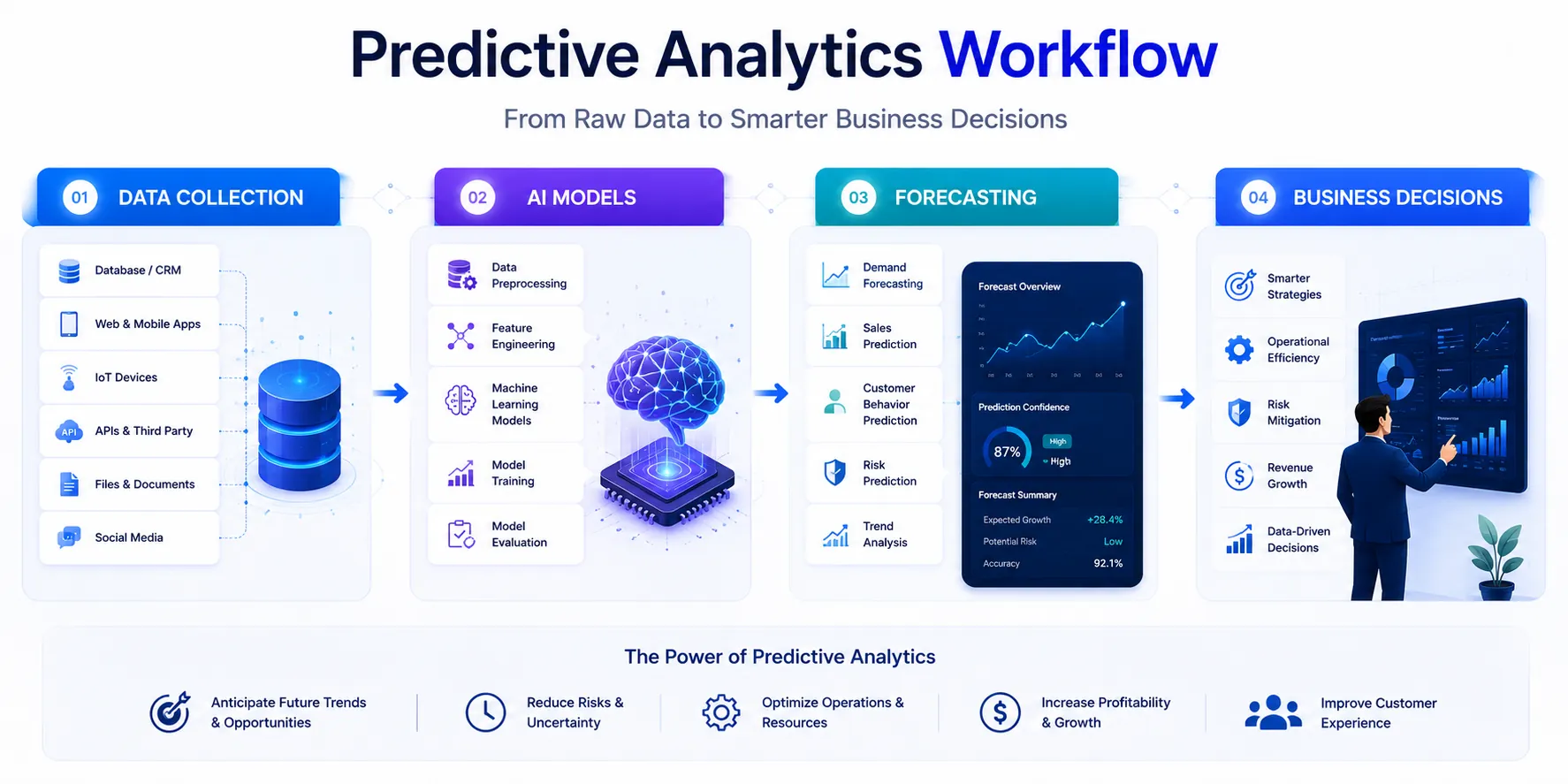
“What is likely to happen next?”
Unlike traditional reporting, predictive analytics continuously learns from new data, enabling businesses to make proactive rather than reactive decisions.
Common Components
- Historical Business Data
- Machine Learning Models
- Statistical Algorithms
- Real-time Data Processing
- AI Forecasting Models
- Interactive Dashboards
Why Businesses Need Predictive Analytics
Today’s markets are dynamic, competitive, and customer expectations change rapidly.
It enables businesses to:
- Forecast future demand
- Reduce operational risks
- Improve customer satisfaction
- Optimize inventory
- Detect fraud early
- Increase sales opportunities
- Improve financial planning
- Automate decision-making
Instead of relying solely on experience or intuition, organizations can make informed decisions backed by data.
How AI Makes Analytics Smarter
Artificial Intelligence takes analytics beyond simple forecasting by identifying complex patterns that humans often miss.
Machine Learning algorithms continuously improve prediction accuracy as more data becomes available.
Examples include:
- Customer purchase predictions
- Product recommendation engines
- Equipment failure forecasting
- Dynamic pricing
- Demand forecasting
- Employee attrition prediction
The combination of AI and machine learning insights enables businesses to respond faster and make more confident decisions.
Real Business Applications
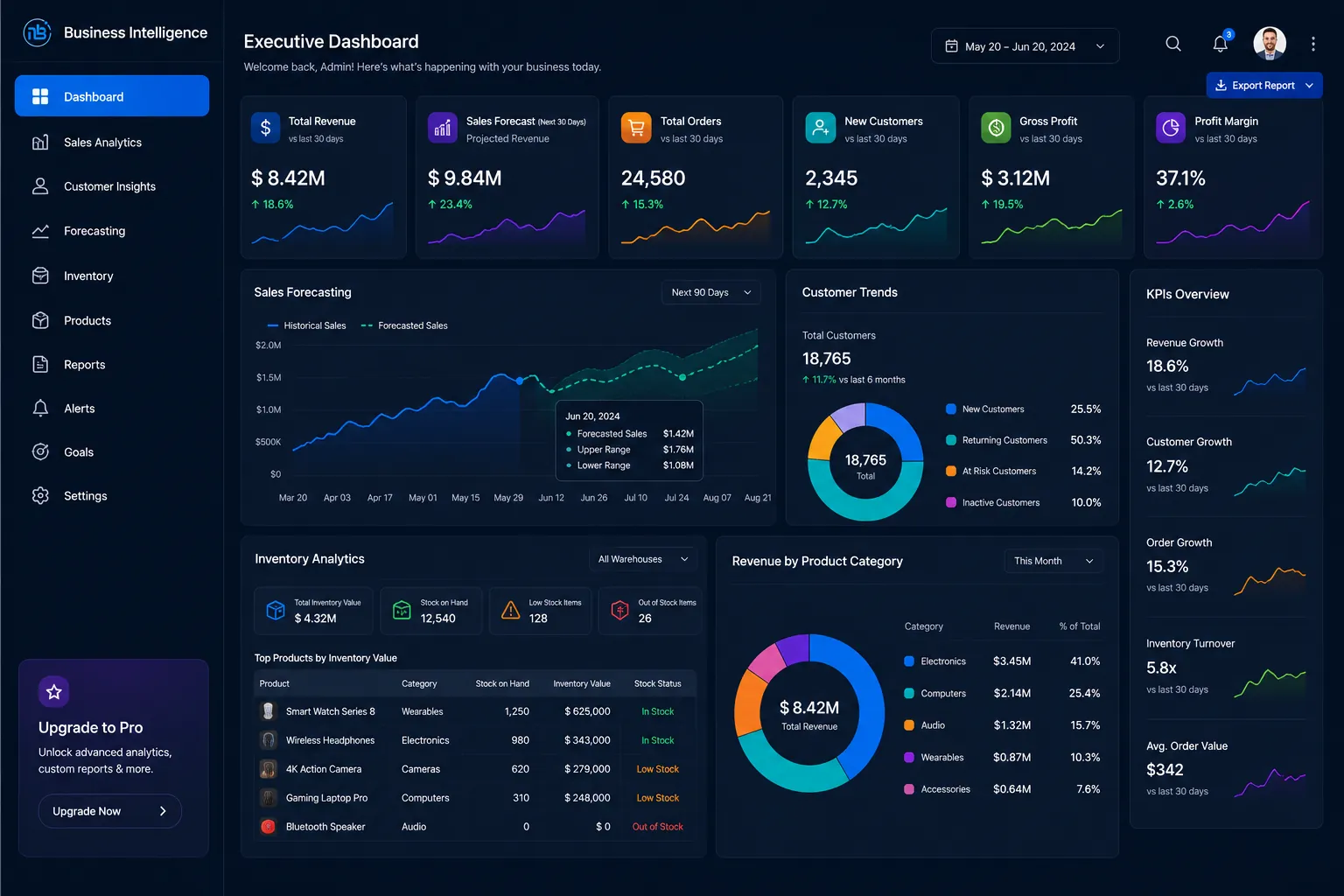
Predictive Analytics is transforming multiple industries.
Retail & eCommerce
- Demand forecasting
- Personalized product recommendations
- Customer lifetime value prediction
- Inventory optimization
Healthcare
- Disease risk prediction
- Patient readmission forecasting
- Resource allocation
- Clinical decision support
Banking & Finance
- Fraud detection
- Credit risk assessment
- Loan approval predictions
- Investment forecasting
Manufacturing
- Predictive maintenance
- Production optimization
- Quality control
- Supply chain forecasting
Logistics & Transportation
- Route optimization
- Shipment delay prediction
- Fleet maintenance
- Fuel consumption forecasting
Real Estate
- Property price prediction
- Lead scoring
- Market trend analysis
- Investment recommendations
Core Technologies Behind Predictive Analytics
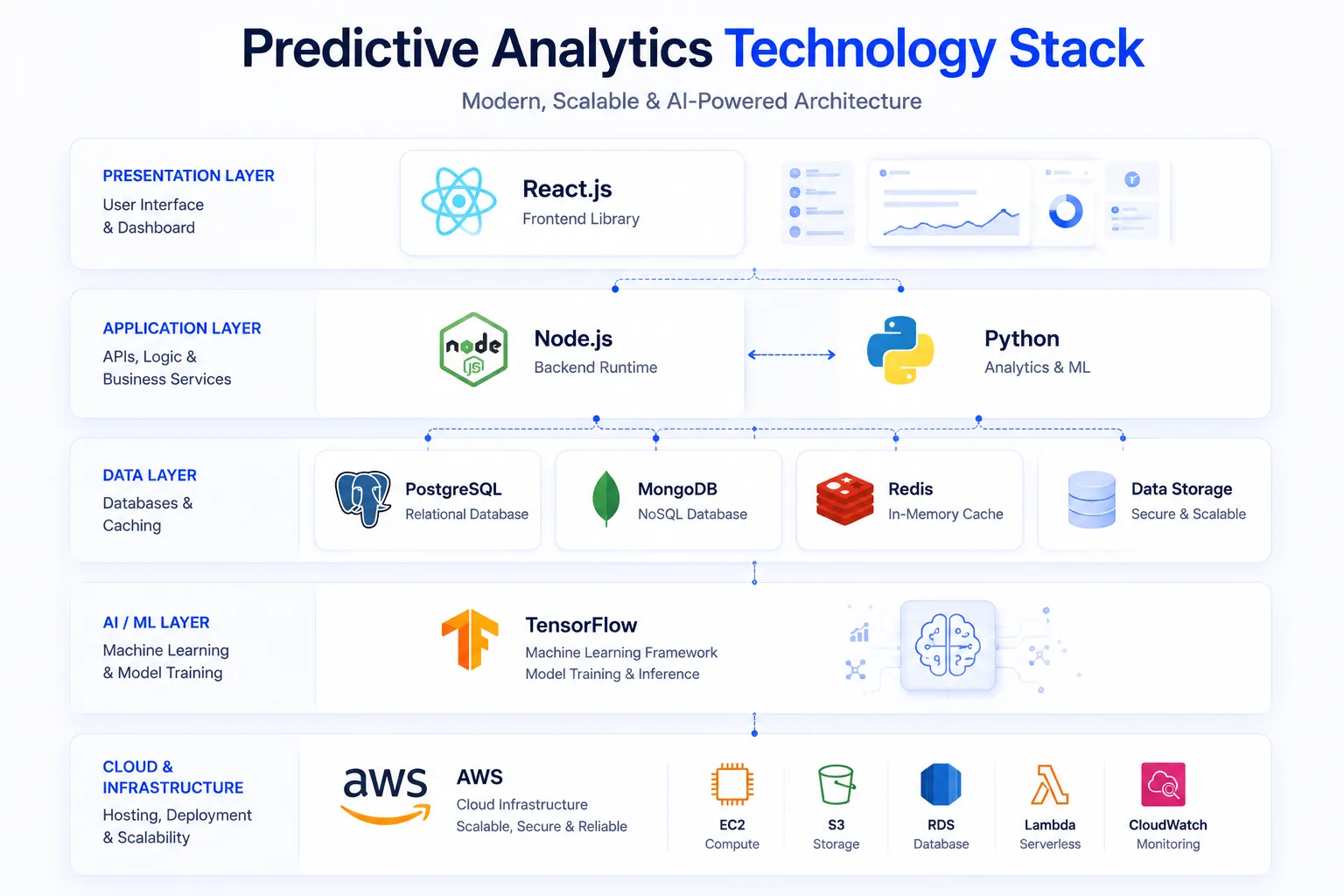
A modern predictive analytics platform combines several technologies.
Typical Technology Stack
Benefits for Modern Businesses
Organizations implementing predictive analytics often experience:
- Faster business decisions
- Higher operational efficiency
- Better customer retention
- Improved revenue forecasting
- Reduced business risks
- Lower operational costs
- Enhanced customer experiences
- Smarter strategic planning
The result is a business that can adapt quickly and compete more effectively in a data-driven market.
Challenges to Consider
While predictive analytics offers significant advantages, organizations should also prepare for challenges such as:
- Poor data quality
- Data privacy and compliance
- Model bias
- Integration with legacy systems
- Skilled resource requirements
- Continuous model monitoring
A successful implementation depends on both technology and business strategy.
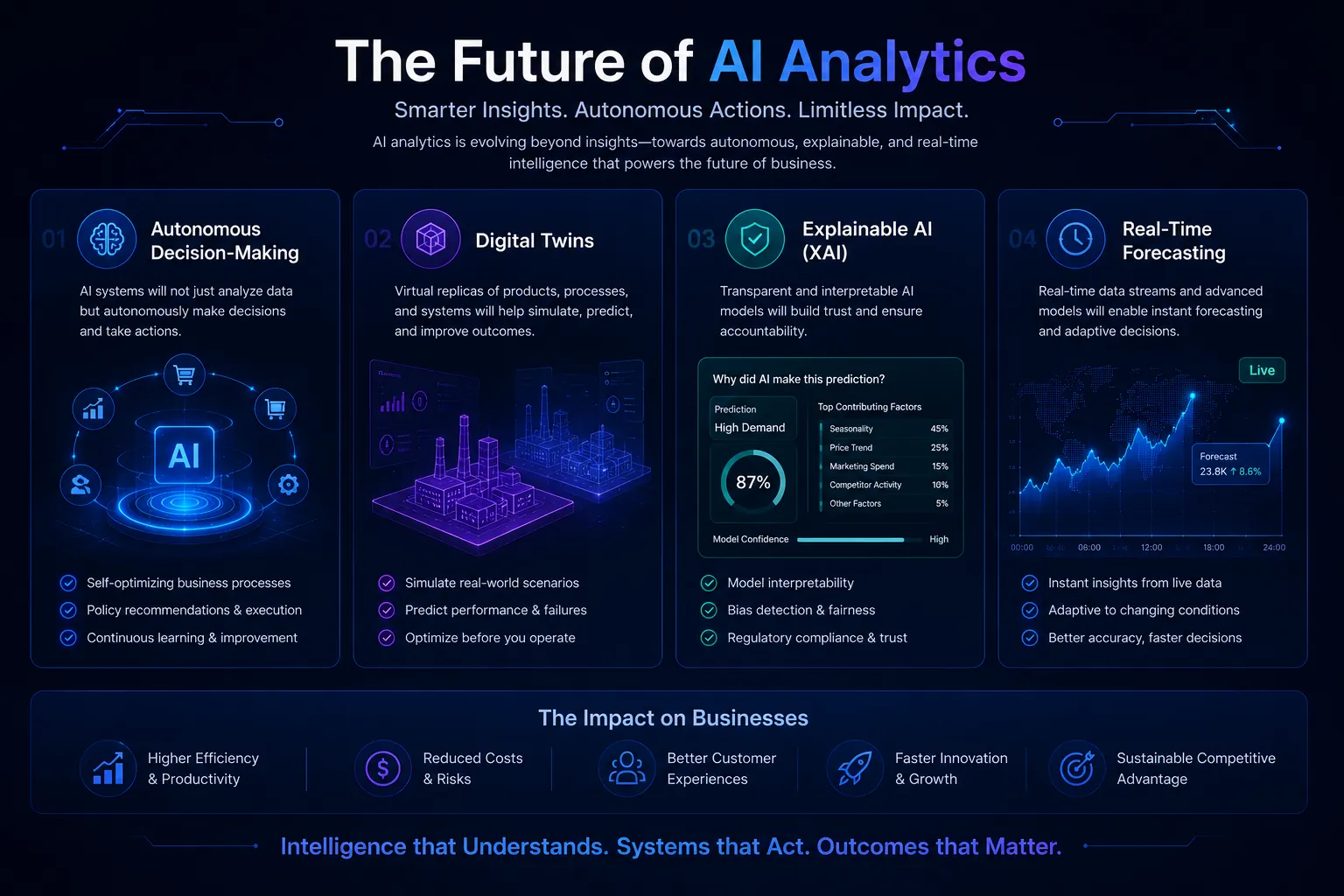
Future Trends
The future of predictive analytics is increasingly driven by AI and automation.
Emerging trends include:
- Generative AI-assisted forecasting
- Real-time predictive dashboards
- AutoML platforms
- Explainable AI (XAI)
- AI-powered digital twins
- Hyper-personalized customer experiences
- Predictive cybersecurity
- Autonomous business decision systems
These innovations will enable businesses to move from prediction to intelligent automation.
How We Approach Predictive Analytics at Notebrains
At Notebrains, we believe predictive analytics should deliver measurable business value rather than simply generating reports.
Our approach begins with understanding the client’s business processes, identifying high-impact data sources, and defining clear objectives such as improving operational efficiency, forecasting demand, reducing risks, or enhancing customer experiences.
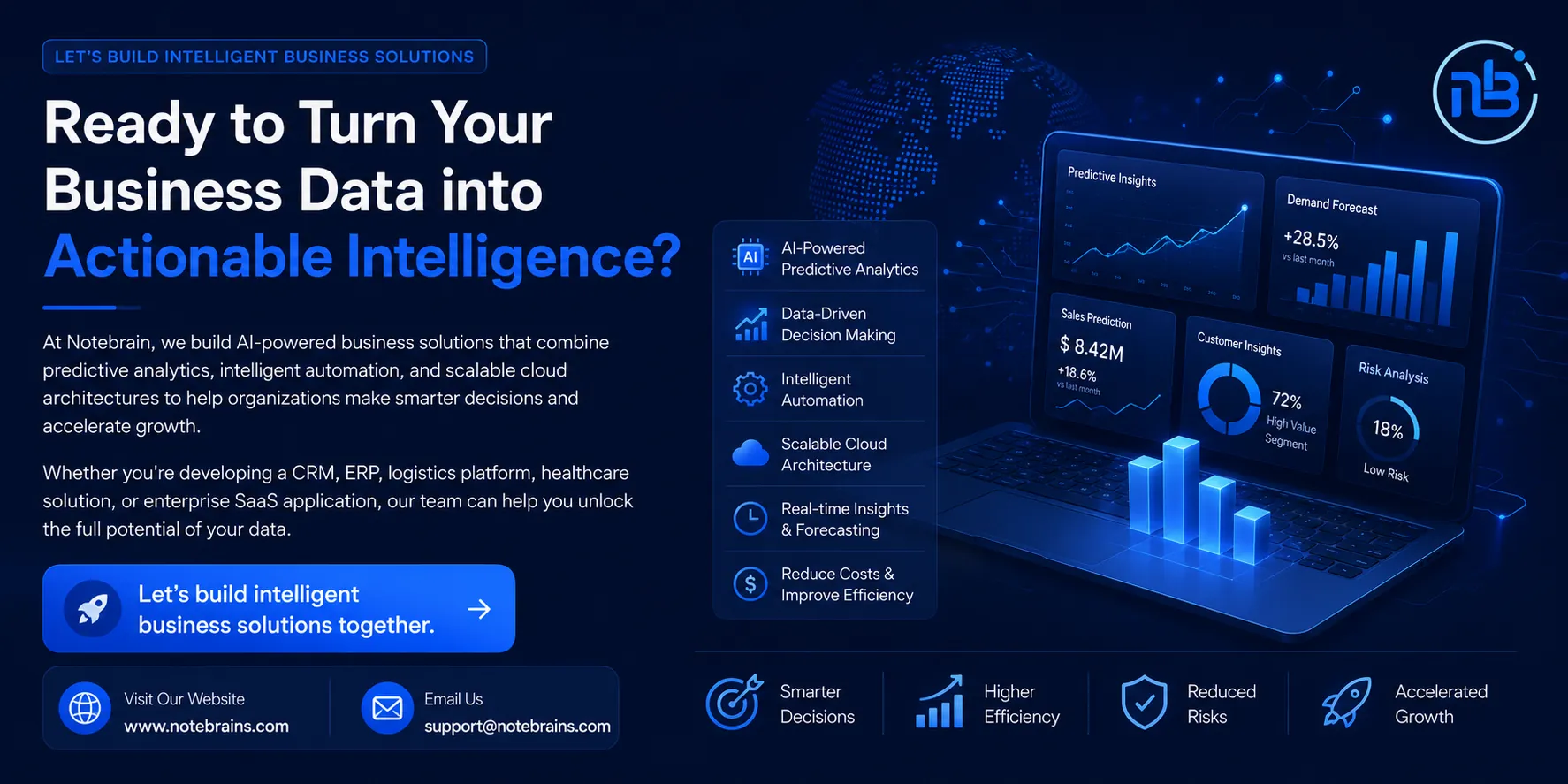
We design scalable analytics solutions using modern technologies including React.js, Node.js, Laravel, Python, PostgreSQL, MongoDB, Redis, and cloud platforms such as AWS and Azure. By integrating AI models, business intelligence dashboards, and secure APIs, we help organizations transform raw data into actionable insights.
Whether developing enterprise CRM systems, logistics platforms, travel marketplaces, or custom SaaS applications, we ensure predictive analytics becomes an integral part of the decision-making process, not just an additional feature.
Frequently Asked Questions
Predictive Analytics uses AI, Machine Learning, and historical data to forecast future outcomes and support better business decisions.
No. Startups and SMEs can also benefit from predictive analytics for sales forecasting, customer insights, and operational optimization.
Retail, Healthcare, Manufacturing, Logistics, Banking, Insurance, Education, Real Estate, and eCommerce are among the leading adopters.
Popular technologies include Python, TensorFlow, ReactJS, NodeJS, PostgreSQL, MongoDB, AWS, Azure, Tableau, and Power BI.
Conclusion
In today’s data-driven economy, businesses that rely solely on historical reporting risk falling behind. Predictive Analytics empowers organizations to anticipate opportunities, reduce uncertainty, and make smarter decisions with confidence.
By combining AI, machine learning, and business intelligence, organizations can unlock deeper insights into customer behavior, operational performance, and future trends. The ability to forecast rather than react is becoming a key differentiator for businesses seeking sustainable growth.
Whether you’re planning to enhance an existing platform or build an AI-powered analytics solution from the ground up, investing in predictive analytics today can create a stronger, more resilient business for tomorrow.