

Introduction
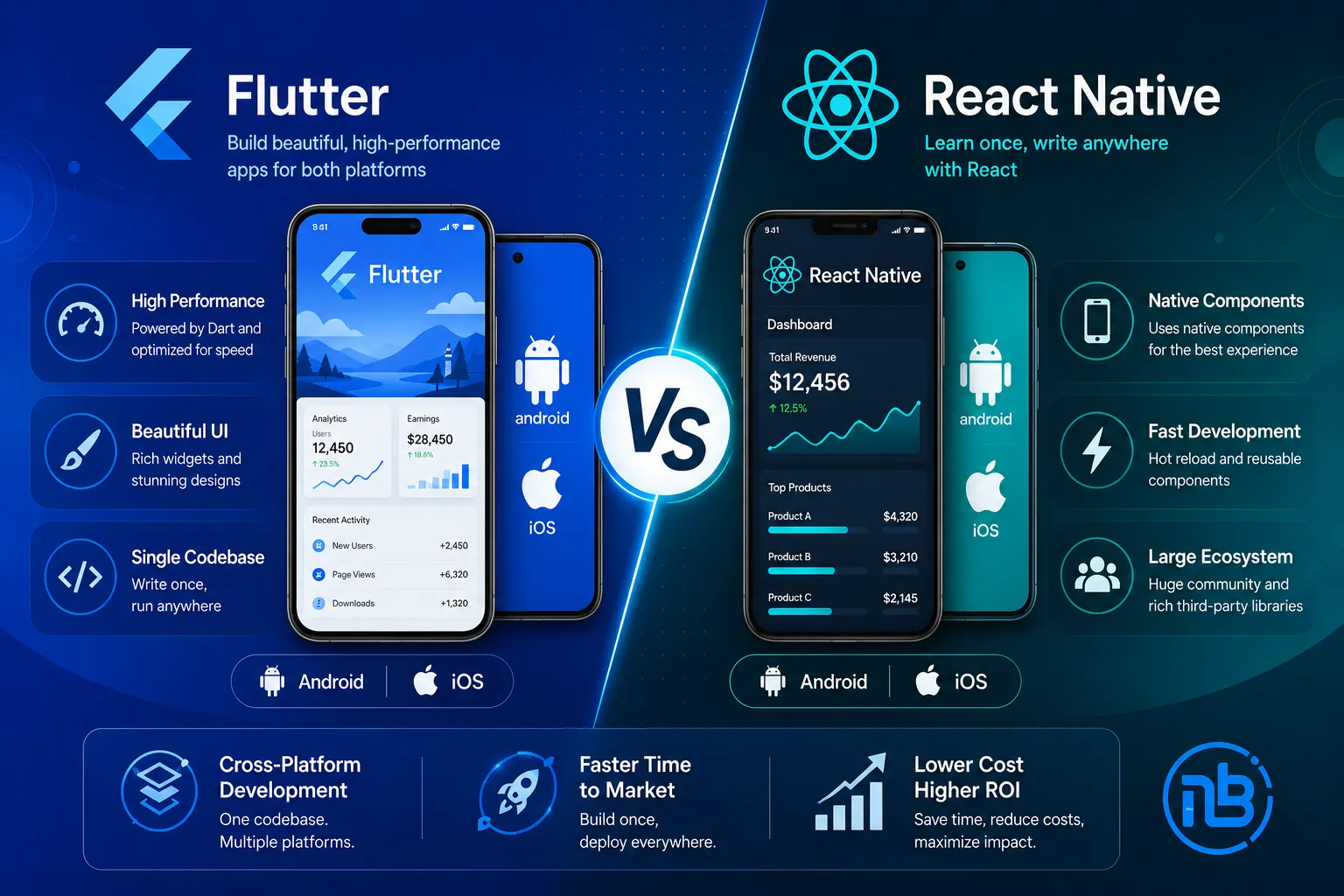
Building a mobile application today is no longer just about choosing between Android and iOS, it’s about delivering a seamless user experience across both platforms while optimizing development time, cost, and performance.
This is why the Flutter vs React Native debate has become one of the most important discussions in modern cross-platform app development. Both frameworks allow developers to build Android and iOS applications from a single codebase, helping businesses accelerate time-to-market while reducing development and maintenance costs.
However, although both frameworks offer similar advantages, they differ significantly in architecture, performance, UI capabilities, scalability, and long-term maintainability.
Having delivered cross-platform applications for industries including CRM, logistics, healthcare, travel, marketplaces, and enterprise SaaS, we’ve found that there’s no one-size-fits-all answer. The right choice depends on your business objectives, product complexity, development expertise, scalability requirements, and future growth plans.
In this comprehensive Flutter vs React Native comparison, we’ll evaluate both frameworks from technical and business perspectives to help you determine which is the better fit for your next mobile application.
Let’s compare them from both a technical and business perspective.
What is Flutter?
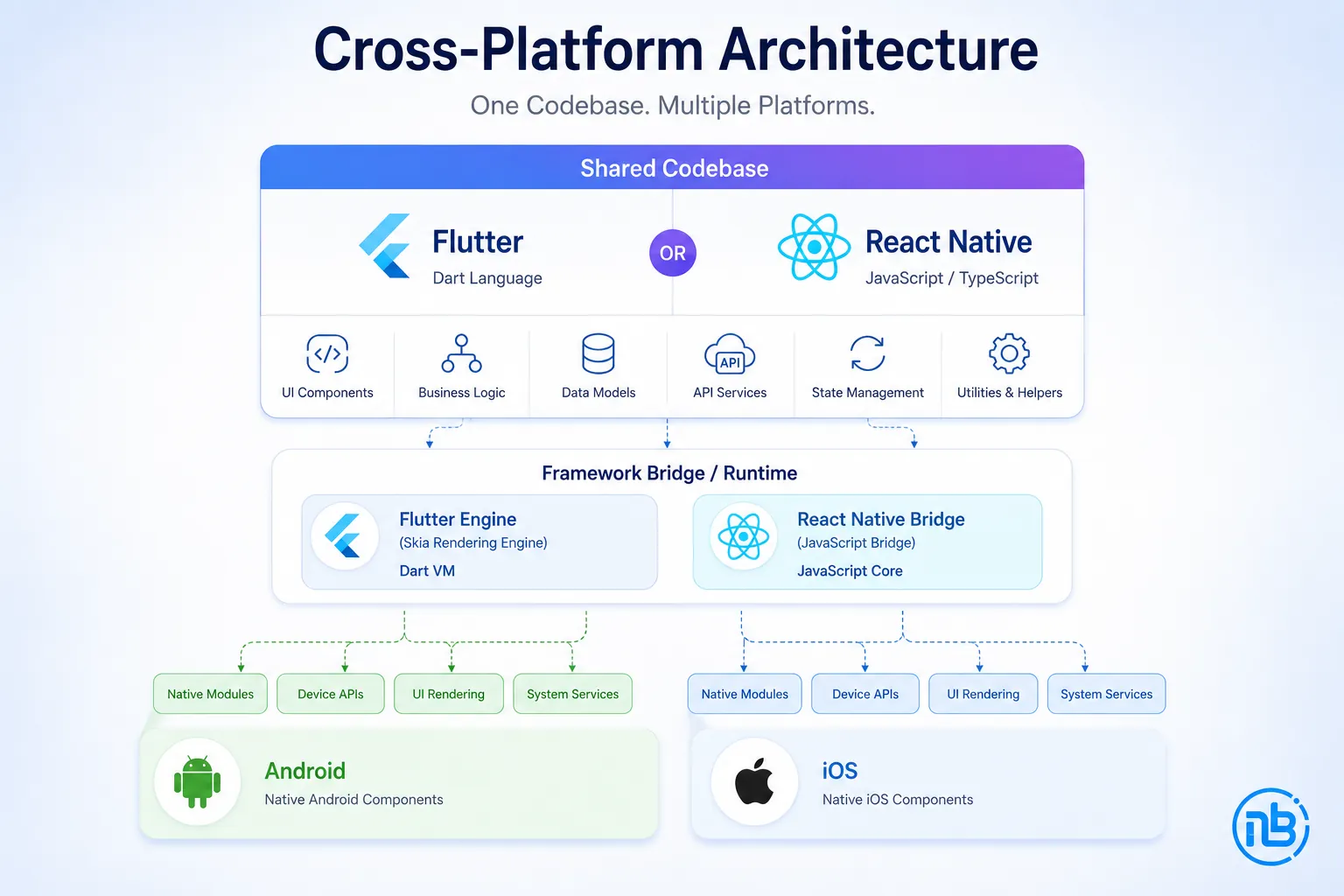
Flutter is Google’s open-source UI toolkit that allows developers to build applications for Android, iOS, Web, Desktop, and Embedded devices using a single Dart codebase.
Instead of relying on native UI components, Flutter renders its own widgets, providing a consistent design across platforms.
Best suited for
- Custom UI-heavy applications
- Startup MVPs
- Enterprise apps
- E-commerce platforms
- FinTech applications
- Travel & booking platforms
What is React Native?
React Native is Meta’s open-source framework that enables developers to build cross-platform mobile applications using JavaScript and React.
It utilizes native UI components, making it a popular choice for teams already experienced with React.js web development.
Best suited for
- Content-driven applications
- CRM solutions
- Business dashboards
- Social networking apps
- Existing React.js ecosystems
- Rapid MVP development
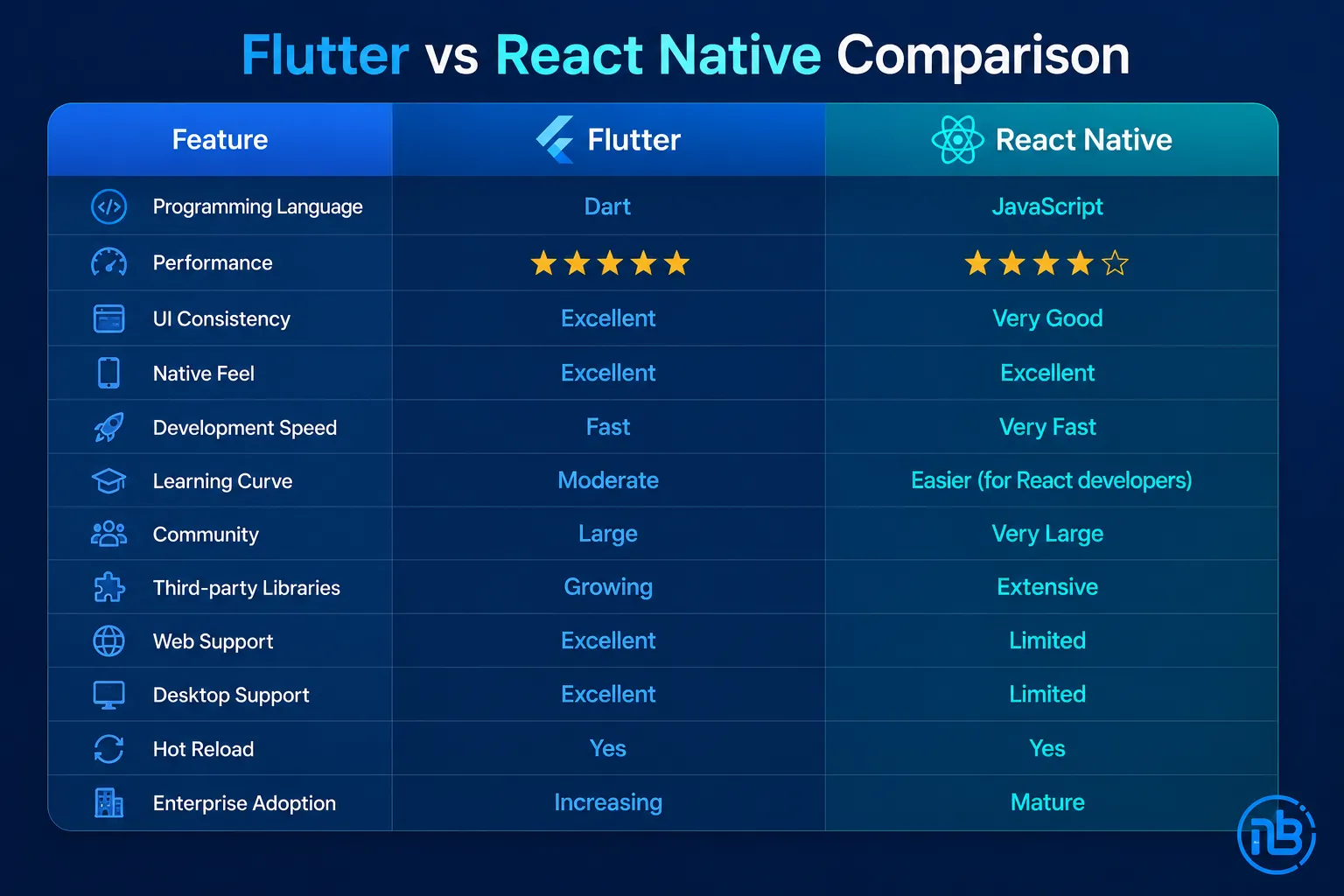
Flutter vs React Native Comparison
Performance Comparison
Flutter generally delivers smoother animations and better graphics performance because it uses its own rendering engine.
React Native, while highly efficient, depends on communication between JavaScript and native components, which may affect performance in graphics-intensive applications.
For applications involving animations, maps, dashboards, or real-time visualizations, Flutter often has a performance advantage.
User Interface & Design
Flutter offers complete control over UI design through its widget-based architecture.
This enables developers to create visually consistent interfaces regardless of the operating system.
React Native follows native UI guidelines more closely, making applications feel familiar to Android and iOS users.
If your application requires highly customized interfaces, Flutter is often the preferred choice.
Development Speed
Both frameworks significantly reduce development effort by enabling code reuse across platforms.
React Native offers an advantage for organizations already using React.js because developers can leverage existing JavaScript knowledge.
Flutter, however, provides excellent developer productivity through Hot Reload, reusable widgets, and a rich component library.
Scalability & Enterprise Readiness
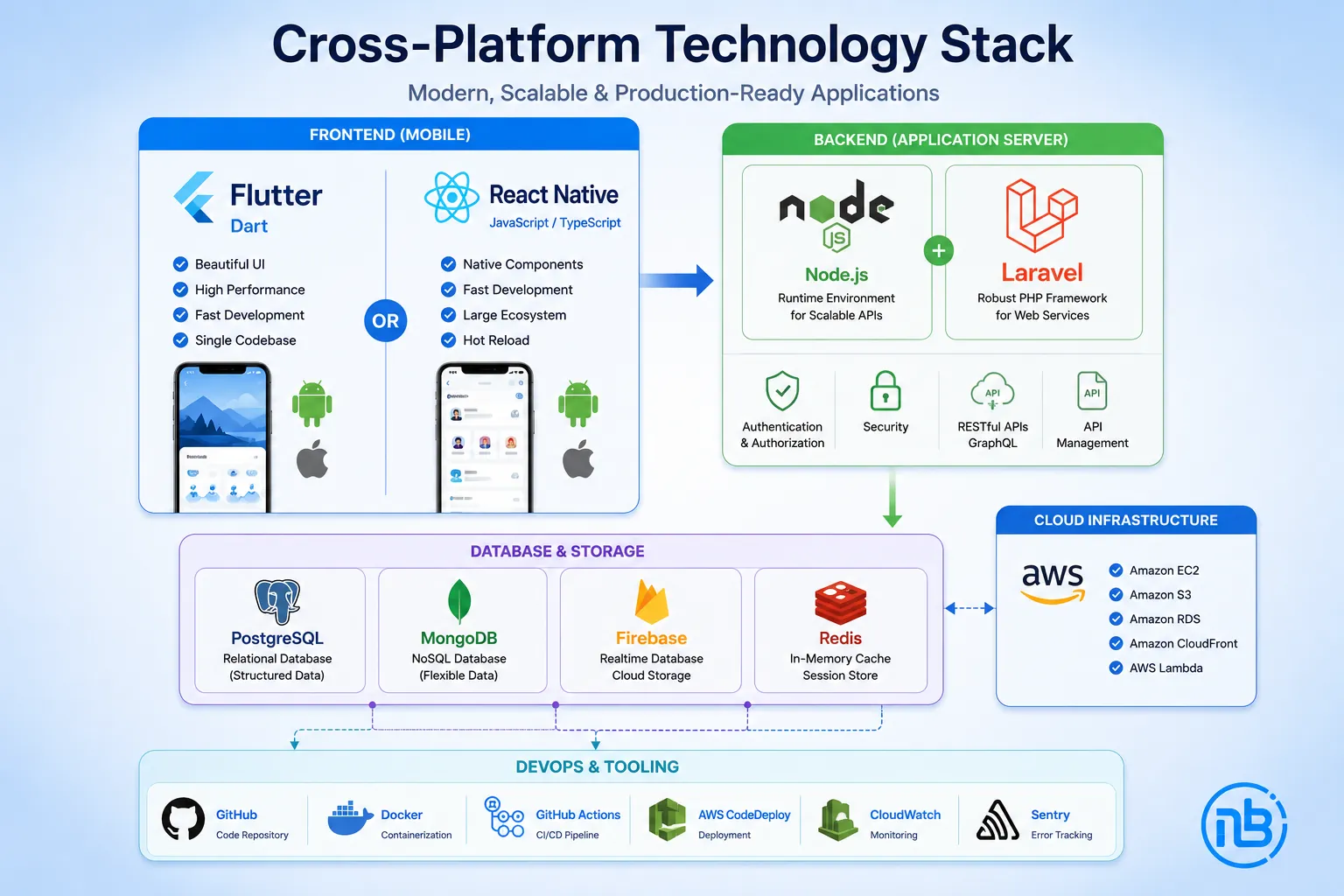
For enterprise-grade applications, scalability extends beyond the frontend.
Regardless of the framework, success depends on:
- Backend architecture
- API design
- Authentication
- Database optimization
- Cloud infrastructure
- CI/CD
- Monitoring
Both Flutter and React Native integrate effectively with modern backend technologies such as Node.js, Laravel, PostgreSQL, MongoDB, Redis, Firebase, and AWS.
Which Framework Do We Recommend?
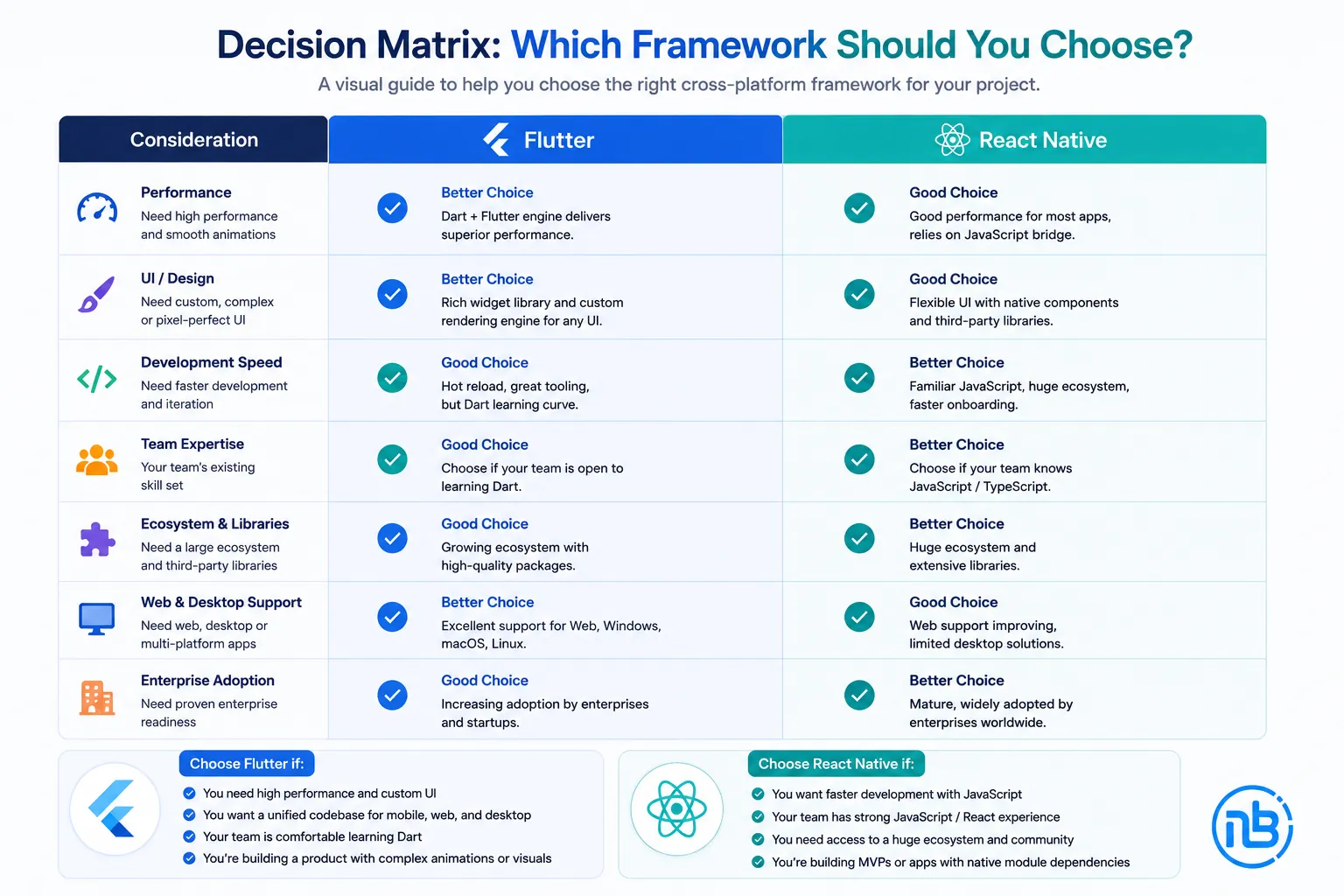
Rather than recommending one framework for every project, we evaluate each client’s business objectives before selecting the technology stack.
We typically recommend Flutter when:
- Building visually rich applications
- Developing consumer-facing products
- Creating marketplace platforms
- Building booking systems
- Developing enterprise mobility solutions
- Requiring future web and desktop support
We recommend React Native when:
- The client already uses React.js
- Faster MVP delivery is a priority
- Existing JavaScript teams will maintain the product
- Applications focus more on business workflows than custom UI
The right decision depends on business goals—not technology trends.
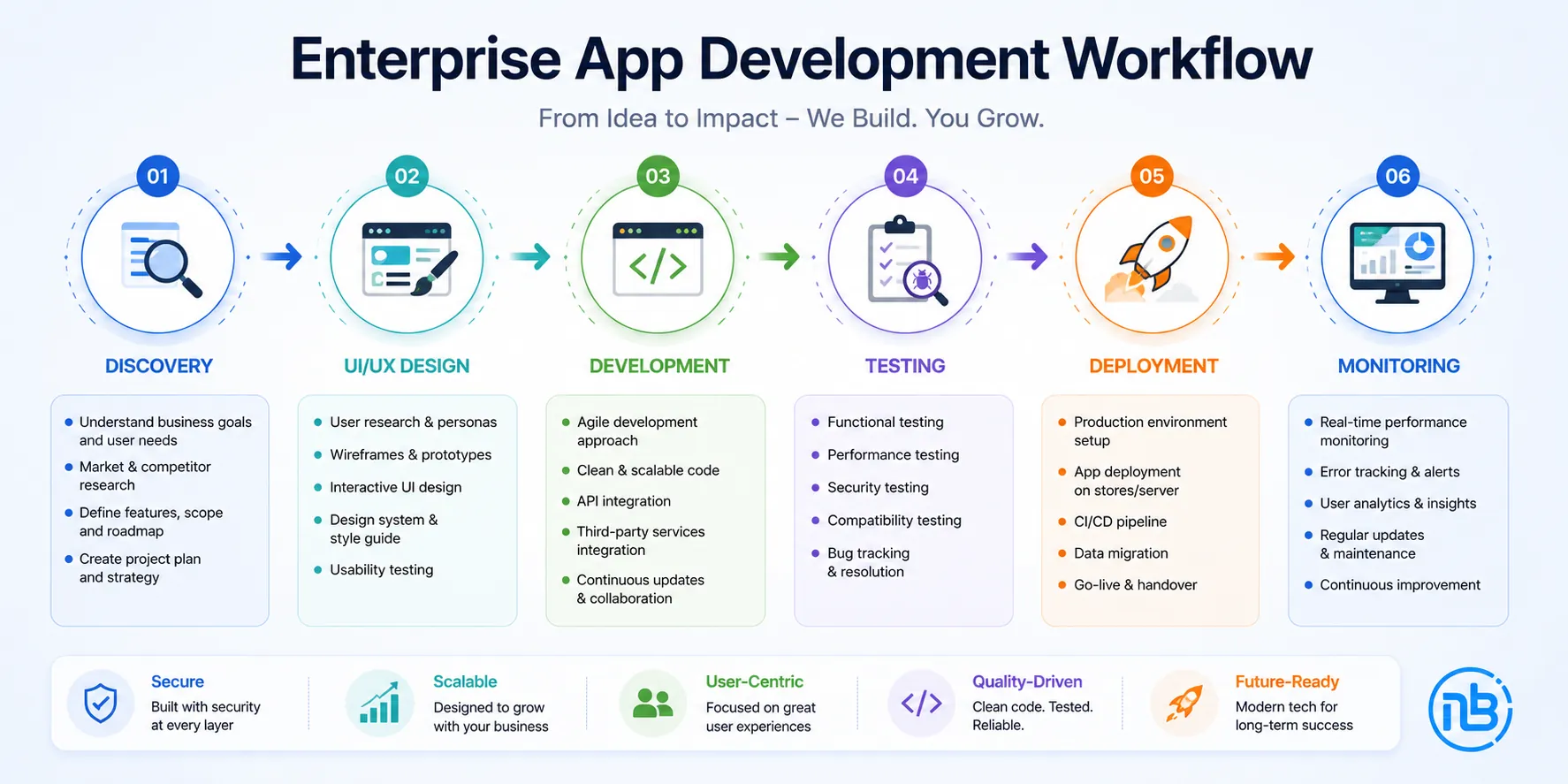
Future of Cross-Platform Development
Cross-platform technologies continue to evolve rapidly.
Key trends include:
- AI-assisted mobile development
- Shared business logic across Web & Mobile
- Offline-first applications
- Super Apps
- Edge Computing
- Progressive Web Apps integration
- Cloud-native mobile architectures
- Low-code integrations
Both Flutter and React Native are expected to remain industry leaders for years to come.
How We Approach Mobile App Development at Notebrains
At Notebrains, technology selection is always driven by business objectives, not personal preference.
We begin every project by understanding the client’s users, expected growth, performance requirements, integration needs, and future scalability.
Our team has experience developing cross-platform mobile applications using Flutter, React Native, Node.js, Laravel, Firebase, PostgreSQL, MongoDB, Redis, and cloud platforms such as AWS and Azure.
Whether we’re building enterprise CRM solutions, logistics platforms, travel marketplaces, SaaS applications, or customer engagement platforms, our focus remains on delivering secure, scalable, maintainable, and high-performing mobile applications that support long-term business growth.
Frequently Asked Questions
For graphics-intensive applications and complex animations, Flutter generally provides better performance due to its rendering engine.
React Native is easier for developers already familiar with JavaScript and React.
Yes. Both Flutter and React Native support Android and iOS from a shared codebase.
Both are suitable for enterprise applications. The decision should be based on project requirements, existing technology stack, scalability, and team expertise rather than popularity alone.
Conclusion
Flutter and React Native have transformed the way businesses build mobile applications by enabling faster development, lower maintenance costs, and broader platform reach through a single codebase.
There is no universal winner. Flutter excels in highly customized, visually rich experiences, while React Native offers advantages for teams invested in the JavaScript ecosystem. The most successful projects begin with a clear understanding of business goals, user expectations, and long-term product strategy before selecting a framework.
Rather than following technology trends, businesses should choose the platform that best aligns with their objectives, scalability needs, and future roadmap.